한뉴픽
Animals Behind The Glass

“The greatness of a nation and its moral progress can be judged by the way they treat animals.” Mahatma Gandhi
On April 8th, a report was filed that ‘a wolf had escaped’ from O-WORLD Zoo and Amusement Park, located in Daejeon. According to O-WORLD, the escaped wolf was a two-year-old male, which escaped by tunneling under the enclosure’s fence. O-WORLD notifed Jung-Gu Ofce and emergency services that the wolf had escaped. At that time, O-WORLD was open, but all visitors were immediately evacuated from the park and no injuries occurred. Daejeon City also dispatched emergency messages to nearby residents and visitors to exercise caution in the surrounding area.
But as time passed without the wolf being captured, local residents were left in fear. Wolves are predators, and even if they are hand-reared by humans, they don’t lose their wild instincts. In particular, encounters with humans or the possibility of breeding with stray dogs to produce ‘Wolfdogs’, probable outcomes. There is very little genetic diference between wolves and dogs, and frst generation wolfdogs are exceptionally ferocious and aggressive. This issue was a hot topic until the wolf was fnally captured alive on April 17th.
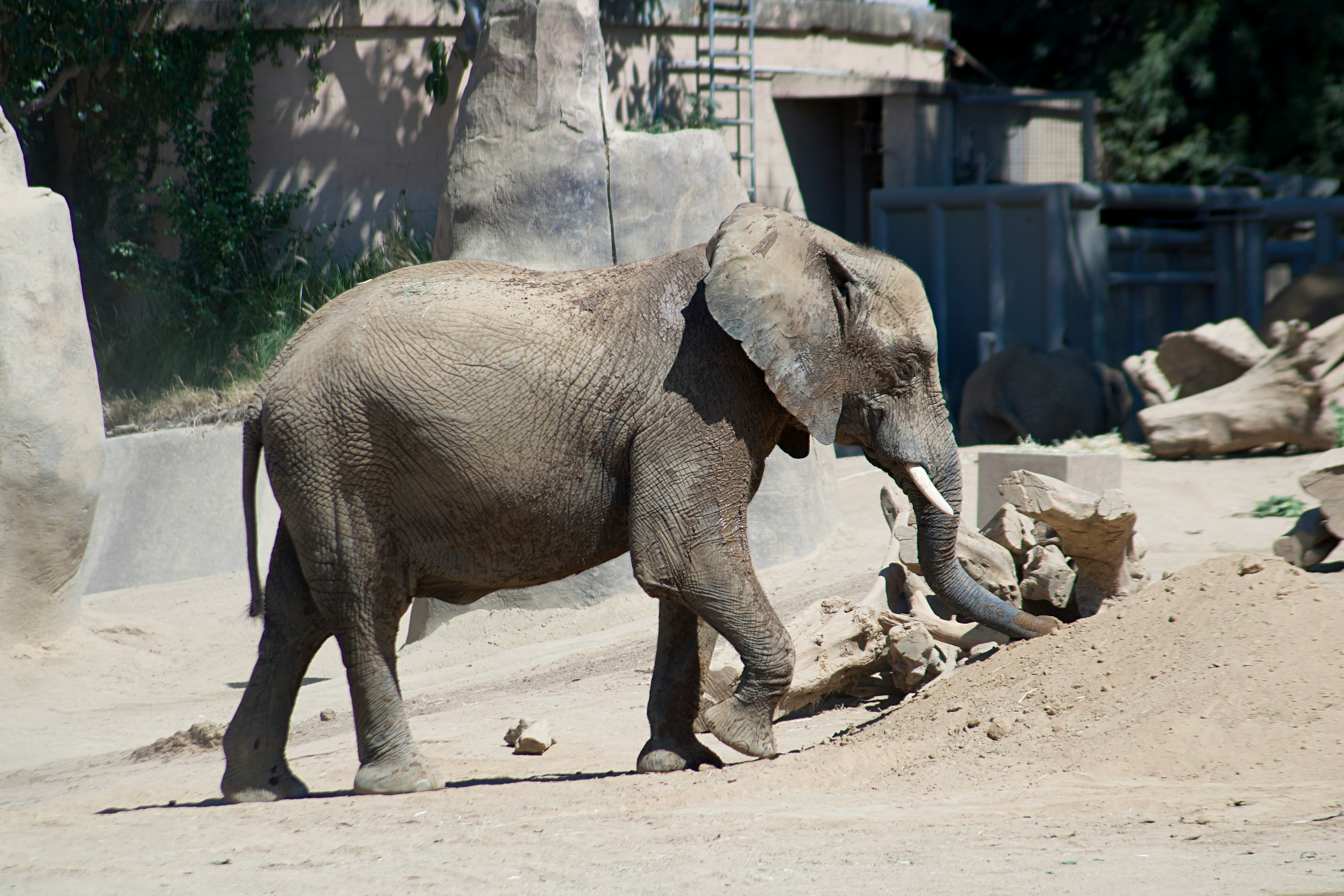
The 9 days between Neukgu’s escape and capture. The most heated topic during this period was ‘why’ Neukgu chose to escape zoo. Many people have expressed the opinion that the enclosures are unft for the animals. Exhibition animals exposed to many people while living in a species inappropriate sized closure exhibit stereotypical behavior because of their chronic stress levels. These behaviors include pacing endlessly in circles within the enclosure and repetitive back and forth movements, and in more severe cases, self injurious behavior such as obsessive licking, biting, or shaking their heads. Unlike their natural habitats, these enclosures have hard concrete floors where people constantly watch them through the glass windows. Animals confned within these walls spend their entire lives confned to habitats that do not meet the species specifc requirements to live a healthy life.
This is not just a problem at O-WORLD. Similar issues are repeated at Children’s Grand Park in Seoul and Dalseong Park in Daegu.
< chosun.com/national/incident> Abroad, Tennoji Zoo in Osaka, has been criticized for the stereotypical behavior of various animals, including chimpanzees and elephants. In 2020, a court in Pakistan even ordered an elephant at Marghazar Zoo in Islamabad to be moved to a sanctuary after it showed signs of distress. To prevent these issues, alternatives like ’behavioral enrichment‘ methods like providing toys and natural hunting tasks as well as stricter regulations have been suggested. However, as of 2026, many animals worldwide still sufer from species inappropriate living quarters, showing that these measures have had little efect.
The biggest problem is that this situation is difcult to solve immediately due to various laws and conflicting interests. Peter Singer’s Animal Liberation, published in 1975, argues that animals should be morally considered because they can feel pain just like humans. It states that animals also have the right to life, liberty, and the pursuit of happiness. Although people have different opinions on animal rights, there is a broad consensus that animals should not be treated as mere objects for entertainment but as individual beings that share this earth with us.
Based on these views, South Korea enacted the Animal Protection Act in 1991, but animals are still treated as “objects” under the Civil Act. According to Article 98, animals are considered “tangible objects. <law.go.kr> ” Unlike humans, they are not subjects with rights but objects that can be owned, sold, or seized. As long as animals are treated as objects, it is nearly impossible to strictly punish cruel abuse, and getting compensation for the death of a pet remains difficult. In 2021, the Ministry of Justice tried to amend the Civil Act, but despite an agreement between political parties, the change was never fnalized because the 21st National Assembly’s term ended.
However, in July 2025, a new amendment was proposed to defne animals as “living individuals” and to ban anyone convicted of animal abuse from owning animals for at least fve years. There are also meaningful changes in public awareness; while a puma was shot and killed after escaping O-World in 2018, citizens strongly demanded that the wolf in the 2026 escape be captured alive. Court rulings are also changing. For example, a man who killed a cat was sentenced to prison, and another who starved over 1,200 animals received the maximum sentence of three years.
Animals are a close part of our daily lives. About 29.2% of Korean households—roughly 15 million people—live with pets, the highest number ever recorded. As the number of people living with animals grows every year, we hope that awareness of animal rights will continue to improve as well.
Kim Taehee / Reporter
정보관리부서 : 홍보팀
최종 수정일 : 2026-04-06