한뉴픽
NASA’s Artemis II Marks a New Era of Lunar Exploration

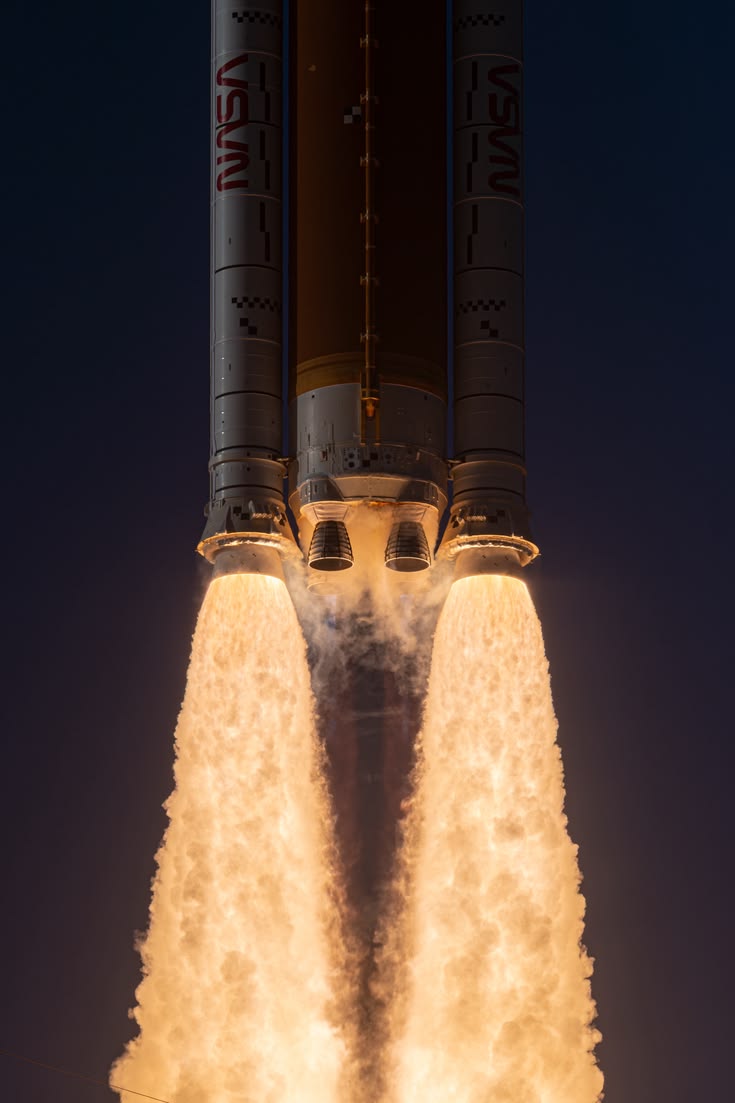
More than half a century ago, humanity frst set foot on the Moon. The Apollo 11 Moon landing in 1969 became one of the most important achievements in the history of science and technology. After Apollo 17, the last crewed Apollo lunar mission, returned to Earth in 1972, humans did not travel beyond low Earth orbit for more than fve decades.
That long gap came to an end in 2026. NASA’s Artemis II mission marked the frst crewed journey around the Moon since the Apollo era and opened a new chapter in human lunar exploration. The mission was designed to test the systems and technologies needed for future crewed missions to the lunar surface and beyond.
Artemis II followed Artemis I, an uncrewed test fight that launched in November 2022. During Artemis I, NASA’s Orion spacecraft traveled around the Moon and returned safely to Earth without astronauts aboard. The mission provided important data on the performance of Orion, the Space Launch System (SLS), and other systems required for future human missions. Artemis II built on that experience by putting astronauts aboard Orion for the frst time.
The Artemis II crew consisted of NASA astronauts Reid Wiseman, Victor Glover, and Christina Koch, along with Jeremy Hansen of the Canadian Space Agency (CSA). The four astronauts launched aboard the Orion spacecraft on April 1, 2026, on a nearly 10- day mission around the Moon. Orion few around the far side of the Moon before beginning its journey back to Earth.
During the mission, the crew tested important spacecraft systems and procedures, including manual piloting, navigation, communications, and life-support-related operations. Christina Koch and Jeremy Hansen also took part in a manual piloting demonstration during the fight, helping NASA gather additional data on how Orion performs in deep space.
Artemis II also achieved a signifcant milestone in human spacefight. On April 6, 2026, the four astronauts traveled approximately 248,655 miles (400,171 kilometers) from Earth, surpassing the previous record for the greatest distance traveled by humans, which had been set by the Apollo 13 crew in 1970. NASA later reported that the mission covered a total distance of 252,756 miles (406,319 kilometers).
The mission also highlighted the growing international character of space exploration. Jeremy Hansen became the frst Canadian to travel to the Moon’s vicinity, representing the Canadian Space Agency as part of the Artemis II crew. NASA’s Artemis program involves cooperation with international partners, including the European Space Agency (ESA), the Japan Aerospace Exploration Agency (JAXA), and the Canadian Space Agency. This international cooperation is intended to support longer-term exploration and operations around the Moon.
The Artemis II crew also represented important milestones in the history of human spacefight. Victor Glover became the frst Black astronaut to travel to the Moon’s vicinity, while Christina Koch became the frst woman to travel to the Moon’s vicinity. Their participation refected the increasing diversity of crews involved in human space exploration.
Artemis II concluded successfully on April 10, 2026, when the Orion spacecraft carrying the four astronauts splashed down in the Pacifc Ocean of the coast of California. The nearly 10-day mission demonstrated the ability of Orion and its crew to travel around the Moon and safely return to Earth.
The completion of Artemis II has also changed the focus of NASA’s Artemis program. Rather than preparing for Artemis II, NASA is now preparing for Artemis III, which is currently planned for 2027. Under NASA’s updated mission architecture, Artemis III is designed as a crewed demonstration mission in low Earth orbit. It will test rendezvous and docking operations between Orion and commercial lunar landing systems being developed by SpaceX and Blue Origin. The results are expected to help reduce risks before future crewed lunar landings.
NASA currently identifes Artemis IV as the mission intended to return astronauts to the lunar surface. The agency is targeting an early 2028 launch for Artemis IV, which is planned to send astronauts to the lunar South Pole region. Two members of the crew are expected to descend to the surface and spend approximately a week conducting scientifc and exploration activities before returning to lunar orbit.
NASA’s long-term goal extends beyond individual lunar missions. The Artemis program is intended to help establish a sustained human presence on and around the Moon while developing technologies, operational experience, and scientifc knowledge that could support future human missions to Mars.
Many challenges remain. Human space exploration requires substantial funding, complex engineering, and careful management of technical risks. The Artemis program has experienced schedule changes and delays, and NASA continues to modify its mission architecture as it works with commercial and international partners. The agency’s current plans refect an efort to use additional fight tests to reduce risks before astronauts return to the lunar surface.
Artemis II was therefore more than simply a test fight. It was the frst crewed Orion mission and the frst time in more than 50 years that astronauts traveled around the Moon. The mission provided NASA and its partners with valuable experience for the next stages of lunar exploration.
More than 50 years after Apollo 17, humans have once again traveled to the Moon’s vicinity. Artemis II has already become an important milestone in the return of human beings to deep space. As NASA moves toward Artemis III and Artemis IV, the lessons learned from Artemis II are expected to infuence the next phase of lunar exploration and, ultimately, humanity’s plans for missions farther into the solar system.
Simsekyilmaz Simge / Reporter
정보관리부서 : 홍보팀
최종 수정일 : 2026-04-06