한뉴픽
The Devil Wears Prada 2 Revealed in Seoul!

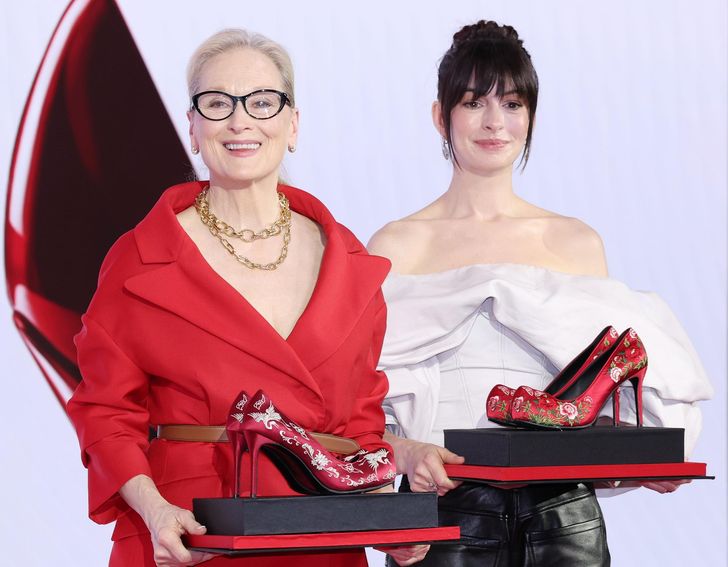
Miranda Priestly once talked about one blue sweater-the “cerulean blue” one-like it was not just clothing, but proof of power. She said people think they choose their style by themselves, but actually it is already designed by the fashion industry. That scene stayed in many people’s minds. The 2006 movie The Devil Wears Prada looked like a fashion film, but deep inside, it was about power, work, class, and desire. Now, almost 20 years later, Miranda is back. But the question in the sequel is more direct and uncomfortable. Is the magazine world already dead? On April 8, Meryl Streep and Anne Hathaway visited the Four Seasons Hotel in Seoul for a press conference. They said the sequel is not about nostalgia. It is about reality. And the setting moving from New York to Seoul is not just for global promotion. Korea is one of the fastest countries when it comes to mobile culture. Trends are made and destroyed online very quickly here. If the magazine “Runway” is going to collapse, Seoul is probably the most symbolic place to show it.
Meryl Streep said, “This is an era where smartphones swallow everything.” It sounds dramatic, but it is true. Magazines were never powerful because they were fast. They were powerful because they could choose. Editors decided what was important and what was worth looking at. That was the real authority of print media. But now, nobody waits. A magazine comes out once a month, but trends change every day, sometimes every hour. Content becomes old the moment it is posted. If it does not get clicks, it is like it never existed. Magazines like Runway cannot create trends anymore. They can only chase them. The movie does not explain this change as a simple “new generation.” It shows how brutal it can be. Digital transformation is often called progress, but in reality, it also destroys jobs, systems, and even dignity. What disappears first is not paper, but the authority behind it.
Anne Hathaway pointed out an important change. In the past, Miranda’s choice was basically law. If she liked something, it became the trend. But now, trends are not decided inside an office. They are decided on platforms. Algorithms study people’s reactions, then push the same style again and again. People believe they are freely choosing, but most of the time they are just consuming what the platform recommends. Of course, this kind of prediction is not entirely new. Companies have been collecting customer data and tracking buying habits for decades through loyalty cards, membership programs, and targeted advertising. What is different now is the speed and scale. Social media platforms can analyze behavior instantly and influence trends in real time. And it is not only about culture. It is about money. Advertisers no longer want to spend their budget on magazine pages. They want something measurable. They want influencer marketing, online ads, and data results. Fashion is no longer only about beauty. It is also about numbers. Now, “what sells” becomes more important than “what looks good.” So the movie asks one sharp question. Is Miranda’s authority outdated, or is she the last standard left?
The sequel is interesting because it does not just say, “old times were better.” It also admits that the magazine industry had its own problems. For a long time, editors acted like they were teaching the public what good taste was. That power was not always fair, and Miranda was the symbol of that cold system. But now, she is the one being pushed out. This is not just the crisis of one editor. It is the collapse of an entire industry. Print magazines disappear, journalists get replaced by influencers, and trends are made by fast reactions, not by experts. In the end, only one thing remains. Speed. And consumption.
The Box Office Is Hot, But the Question Is Cold. According to the Korean Film Council, The Devil Wears Prada 2 reached a 37.4% reservation rate before release, with about 140,000 pre-sold tickets. After it officially opened in Korea on April 29, it started pulling both generations into theaters-people who loved Miranda 20 years ago, and younger people who live on TikTok and Instagram. But the popularity is not only because of memories. People want to see Miranda’s world breaking down. Some will enjoy it like revenge. Others may feel sad, because something is disappearing-not just a magazine, but a certain kind of “taste” and “authority.” In the end, the movie leaves us with an uncomfortable question. Is a world without experts really more democratic? Or is it simply a world where humans are consumed faster, cheaper, and easier? Miranda’s war has started again in Seoul. But honestly, it is not only her war. It is ours too. And in this war, the winner may not be Miranda. The winner has always been the digital platform itself-social media networks, recommendation algorithms, and data-driven systems that shape what people see, buy, and talk about.
Baek Seonye / Reporter
정보관리부서 : 홍보팀
최종 수정일 : 2026-04-06